


Boron
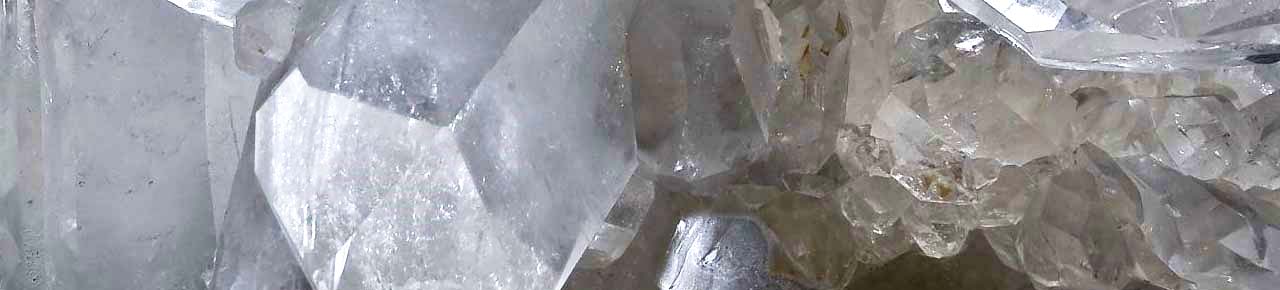
Boron is a non-metallic element found in nature as the isotopes B-10 and B-11, and it occurs in the Earth’s crust at a concentration of 10 ppm. It is not found in its free state but is typically present in the form of sodium, calcium, and magnesium salts.
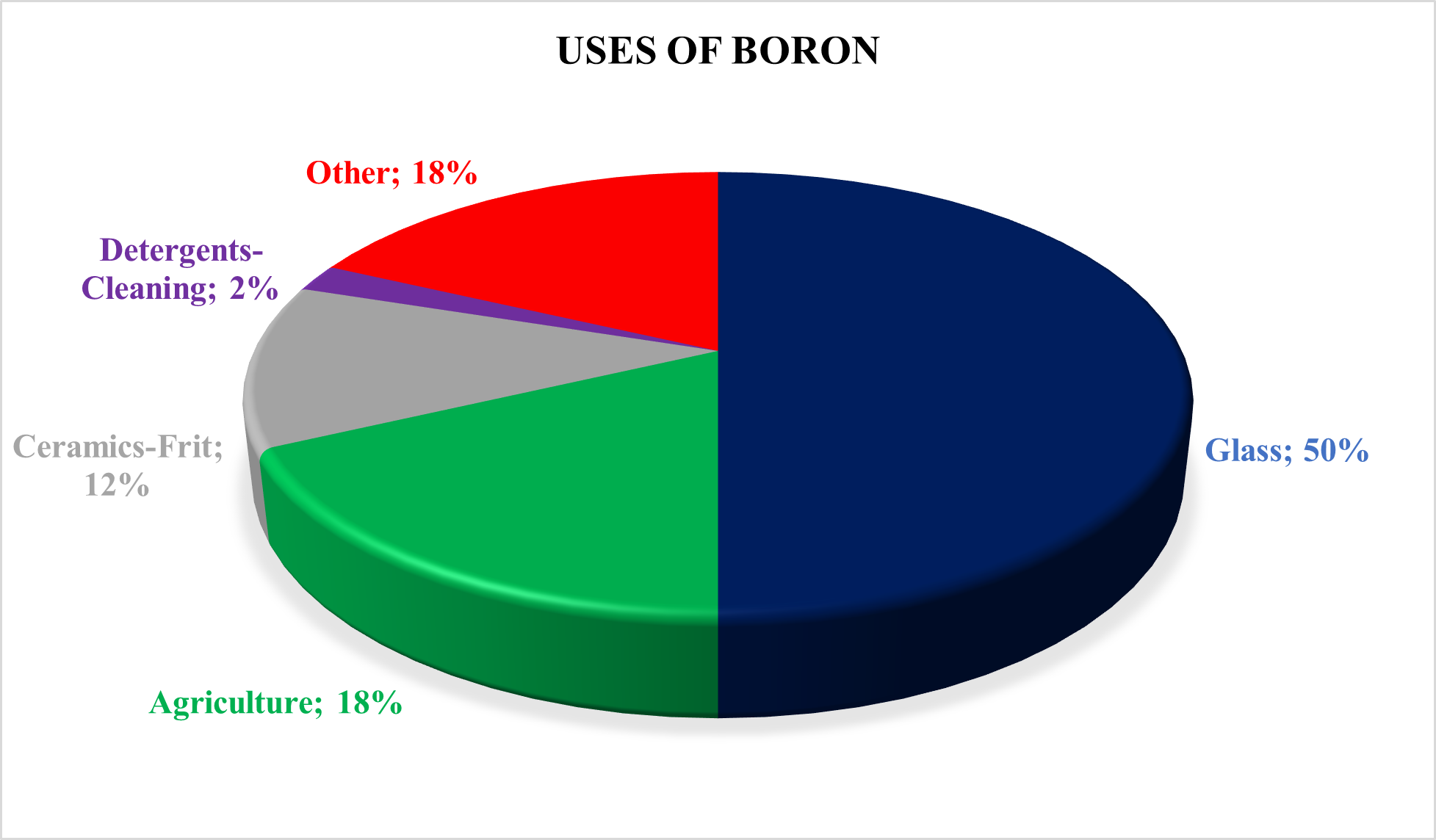
Notable for its widespread industrial use, boron serves as a critical raw material in the glass, ceramics, cement, metallurgy, and energy sectors. In the glass industry, it enhances durability, while in the ceramics sector, it regulates the coefficient of expansion in glazes and frits. In cement production, it increases strength by lowering the clinker calcination temperature; in metallurgy, it is used as a melting accelerator and to form protective slag. In recent years, the use of boron has also become widespread in the shale gas industry.
Boron plays a strategic role in the military and defense industries. Boron carbide is used in armor materials, wear-resistant machine parts, and as a neutron absorber in nuclear applications. In Türkiye, the foundation stone for the Balıkesir-Bandırma Boron Carbide Production Facility was laid in 2019, and the first Ferrobor Production Facility was established in 2022. The aim of these facilities is to increase domestic production of strategic boron products and thereby generate added value.
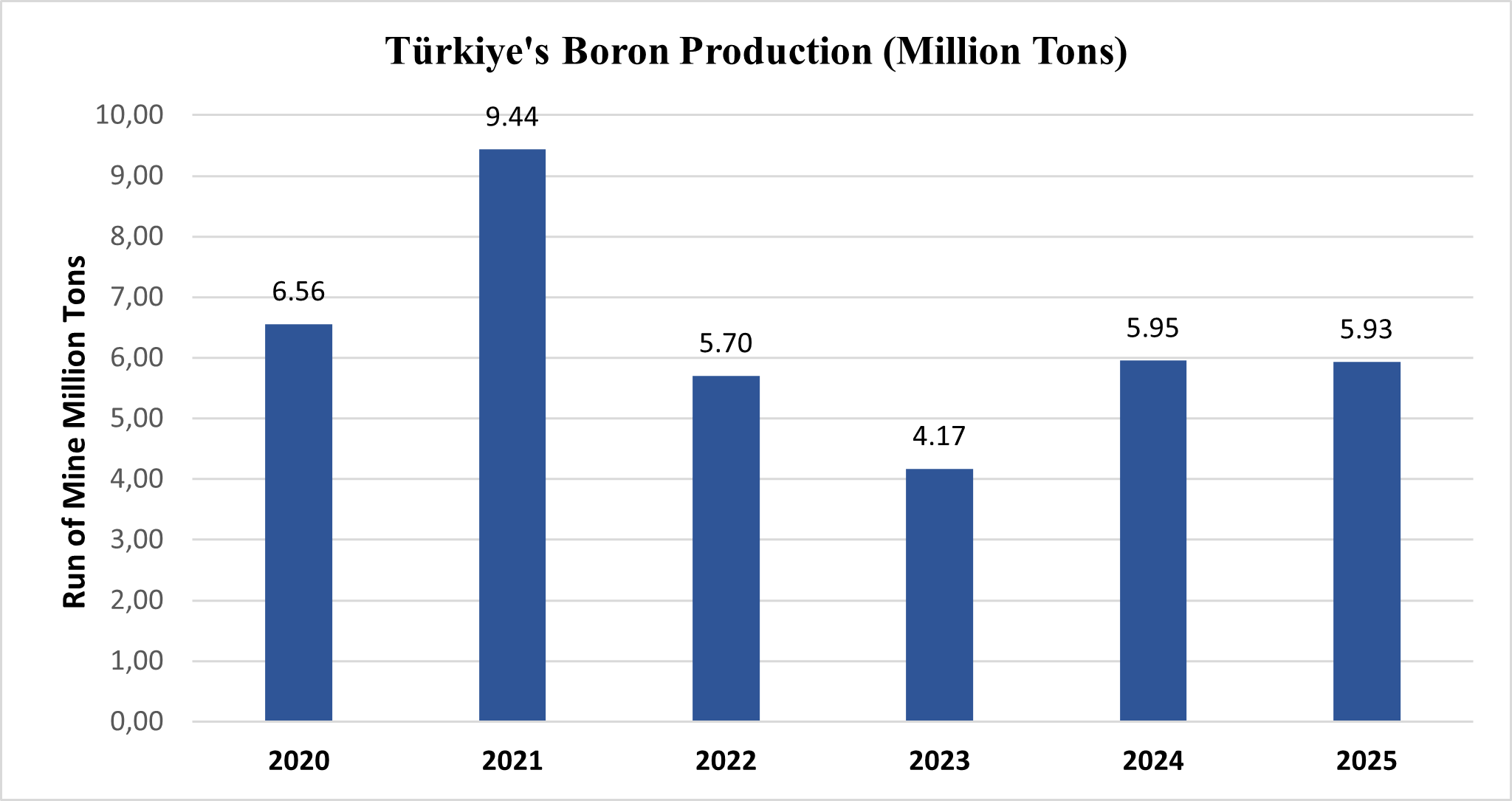
Boron, which plays an important role in everyday life, is used in cleaning products under the BORON brand developed by Eti Maden. During the COVID-19 pandemic, the company contributed to the hygiene sector by producing BOREL hand sanitizer. Türkiye holds 73% of the world’s boron reserves, with the main deposits located in Eskişehir-Kırka, Balıkesir-Bigadiç, Bursa-Kestelek, and Kütahya-Emet. Boron mining and the production of refined products are carried out by Eti Maden. As of 2024, a total of 2.5 million metric tons of boron products were sold; of this total, 2.4 million metric tons came from exports and 104 metric tons from domestic sales, generating $1.322 billion in sales revenue. Türkiye has maintained its position as the world leader in production, accounting for 48% of global boron production.
According to data from the USGS (United States Geological Survey, 2026), global boron reserves are estimated to be approximately 1.09 billion metric tons on a B₂O₃ basis. In addition to Türkiye, countries such as the United States, China, Argentina, Russia, Kazakhstan, Bolivia, Peru, and Chile also possess significant reserves.
Türkiye is a global leader in boron production. The production, operation, and marketing of boron mines are managed by Eti Maden.
In addition to boron mining in Türkiye, significant work is also being conducted on the production of lithium carbonate from boron waste. The pilot plant, established in 2019, began production in 2020, and the lithium carbonate produced has been used by ASPİLSAN in battery production. This step has been a critical development in reducing Türkiye’s dependence on foreign sources for energy storage technologies.
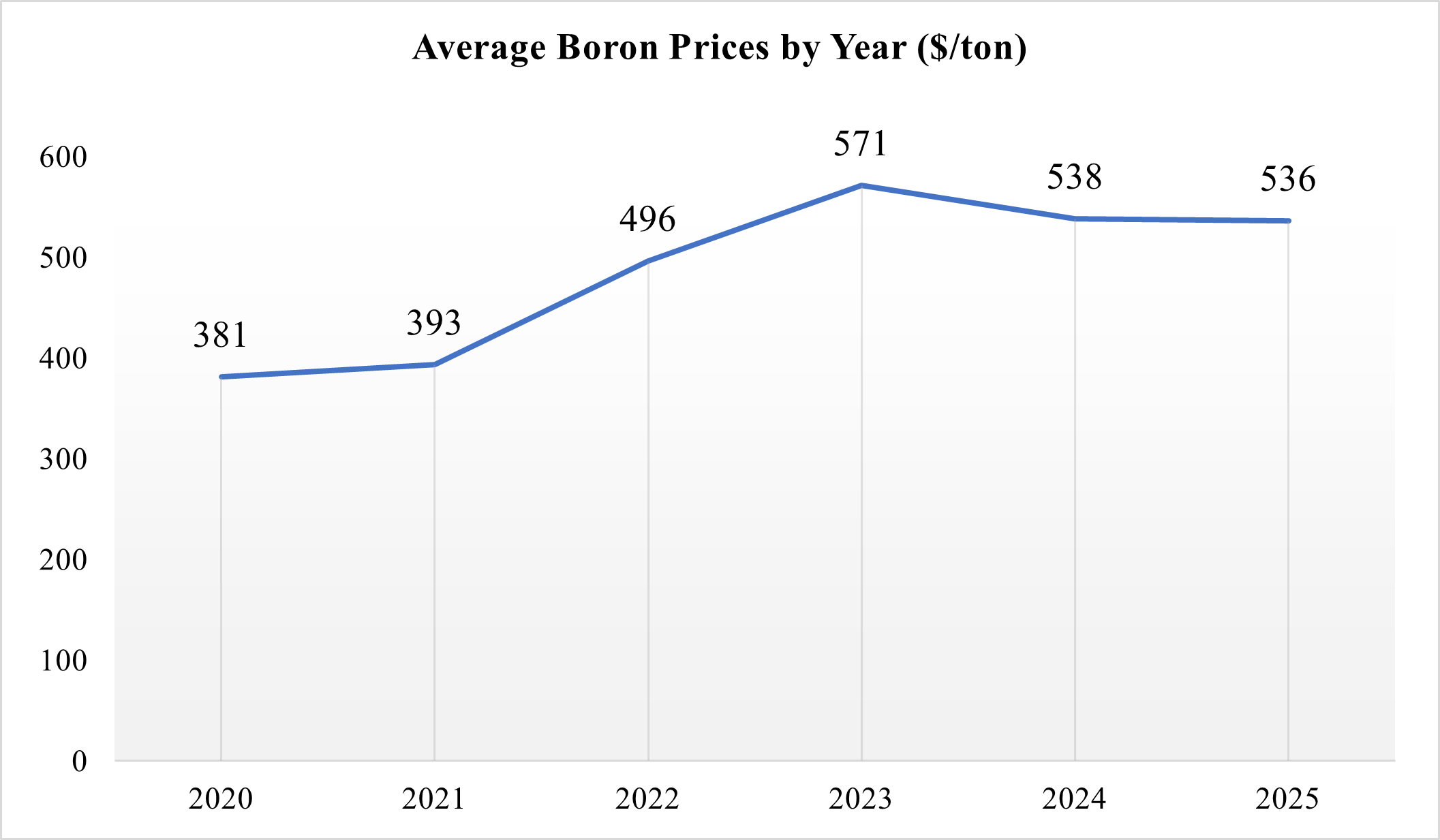
Although specific data on boron prices is not shared because they are considered trade secrets, it is known that boric acid prices have been steadily rising. As of 2025, Türkiye’s boron exports had reached nearly $1.15 billion, with China, India, the United States, Brazil, and Austria serving as the primary export markets. In terms of imports, China ranks first with a 58.05% share.
Boron cannot be recycled directly because it is typically used in single-use products. However, research is being conducted on initiatives such as recovering lithium carbonate from waste generated during boron production. Additionally, sodium percarbonate in detergents, phosphates in glass production, and cellulose-based alternatives in insulation materials can be used as substitutes for boron.
Türkiye’s leading position in the boron sector provides a significant advantage in terms of global boron production and the development of refined boron products. The investments made aim to increase the value added derived from boron mines and to expand the use of boron in technological products.
Date of Update: 30June 2026
The details presented here have been prepared with the aim of informing the users of the website of our Ministry, and do not possess the characteristics of official binding documents.